Original Himalayan Crystal Salt®

Inhaler

LUNG & SINUS HEALTH

5.0/5.0 7 total reviews

Skip to product information
1 of 4

Original Himalayan Crystal Salt®

Inhaler

LUNG & SINUS HEALTH

5.0/5.0 7 total reviews

Support your respiratory health and help maintain your bronchial tract with the Original Himalayan Crystal Salt® Inhaler.* As you inhale, air passes over natural salt crystals that help support moisture balance along the mucous membranes, keeping mucus fluid and supporting clear, comfortable breathing.*


View full details
Original Himalayan Crystal Salt Inhaler
Original Himalayan Crystal Salt®
|
Inhaler
Breathe Easy, Wherever You Are

Supports thinning and clearing of mucus

As you inhale, air passes through the salt chamber and over natural salt crystals. Microscopic salt particles lightly coat the mucous membranes, helping support moisture balance and normal mucus consistency. This supports the body’s natural clearing process for smooth, comfortable breathing.*

Creates a naturally dry, mineral-rich air environment

Inside the inhaler, the salt chamber creates a low-moisture, mineral-rich airflow. Breathing this air can help the airways feel clear and balanced, supporting overall respiratory comfort.*

How to use

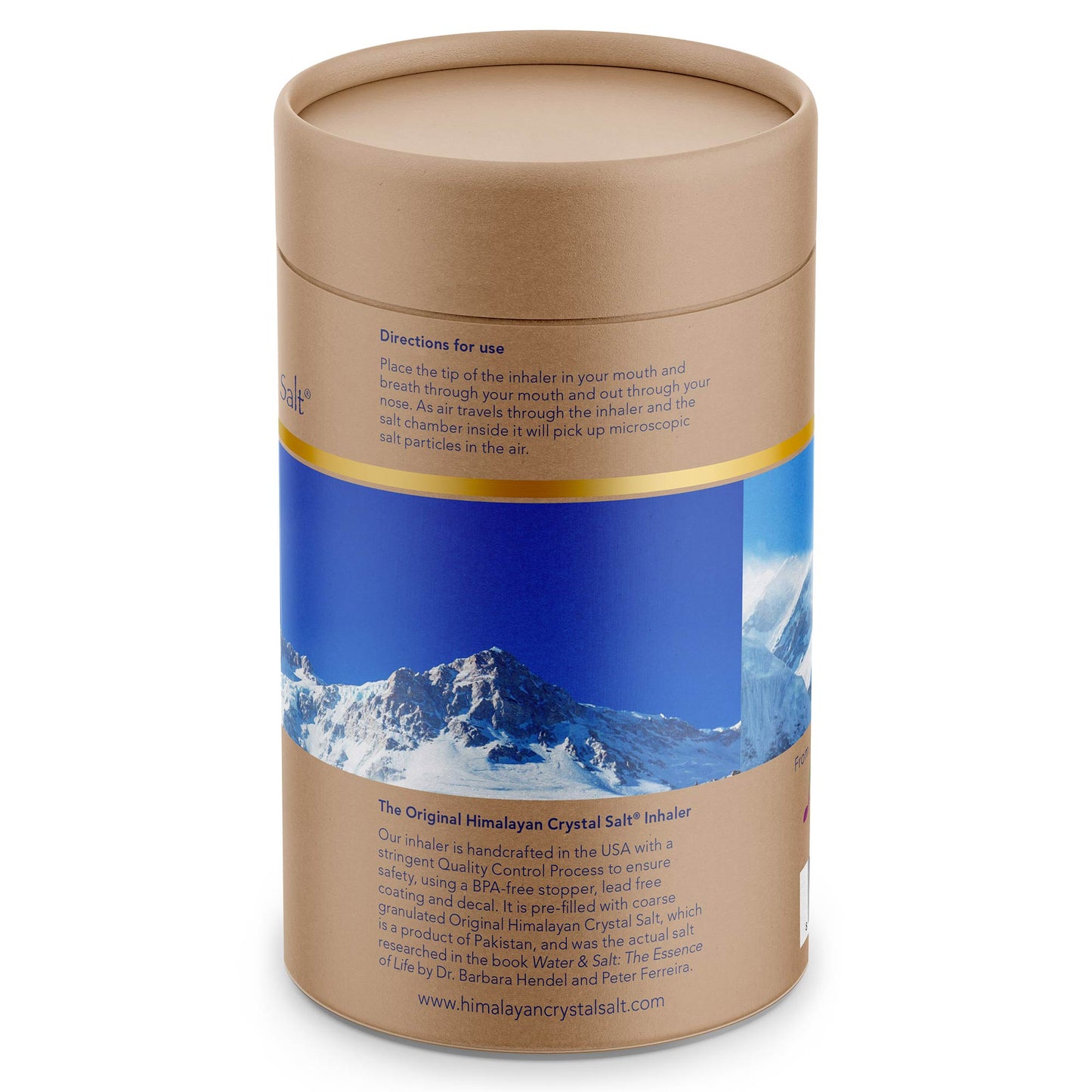
Inhale through the mouth and exhale through the nose for 10-20 minutes, morning and night. As air passes through the salt chamber, microscopic salt particles are carried with the airflow, supporting natural respiratory cleansing and comfort.* Tip: Using the inhaler before bed may support nighttime breathing comfort, especially for those prone to postnasal drip or congestion.*

From Everyday Air Exposure to Long-Term Respiratory Comfort, Salt-Air Support Is the Foundation

Supports Respiratory Comfort*

Helps maintain clear, comfortable breathing*

Supports balanced airway moisture*

Supports natural mucus flow*

Designed for Daily Use

High-quality ceramic inhaler

Pre-filled with coarse Original Himalayan Crystal Salt® (lasts 9-12 months)

Refillable and sustainable

Optimized salt particle size for maximum surface area*

Compact, travel-friendly design

Purity You Can Trust

From a single protected source

No additives, bleaches or anti-caking agents

Lab-verified to contain no detectable microplastics

Salt Comparison Chart +

Unlike common table salt, which is heavily processed, often including bleach, anti-caking agents and stripped down to mostly sodium and chloride, and sea salts, which can vary in mineral profile and can contain contaminants like microplastics, Original Himalayan Crystal Salt® retains its full spectrum of naturally occurring trace elements and minerals in a balanced crystalline form. The refinement of table salt alters its structure, making it harder for the body to process, while the minerals in Original Himalayan Crystal Salt® are present in ionic form and more easily utilized.

Salt Comparison Chart

Salt Comparison Chart

USDA Organic Vegan Kosher 3rd-Party Tested Gluten, Soy, Dairy, Allergen-Free No Fillers, Additives, Preservative

Our Commitment to Ethical Sourcing

Verified Purity

+

Original Himalayan Crystal Salt® comes from the foothills of the Himalayas and was formed over the last 250 million years after the evaporation of an ancient ocean that once covered that area.⁠⠀
⁠⠀
As our Certificate of Analysis shows, our salt has 84 trace elements minerals, in the very ratios similar to in the human body and obviously no modern day pollutants that we find in our oceans today.⁠⠀
⁠⠀
The structure and small particle size support absorption into our cells which promote hydration, versus normal table salt which dehydrates.⁠*
⁠⠀
Most importantly, Original Himalayan Crystal Salt® has research on its health benefits as published in the book Water & Salt the Essence of Life by Dr. Barbara Hendel and Peter Ferreria showing its impact on cellular communication, hydration, supporting acid-alkaline balance and normalized blood pressure.⁠*

Social Impact

+

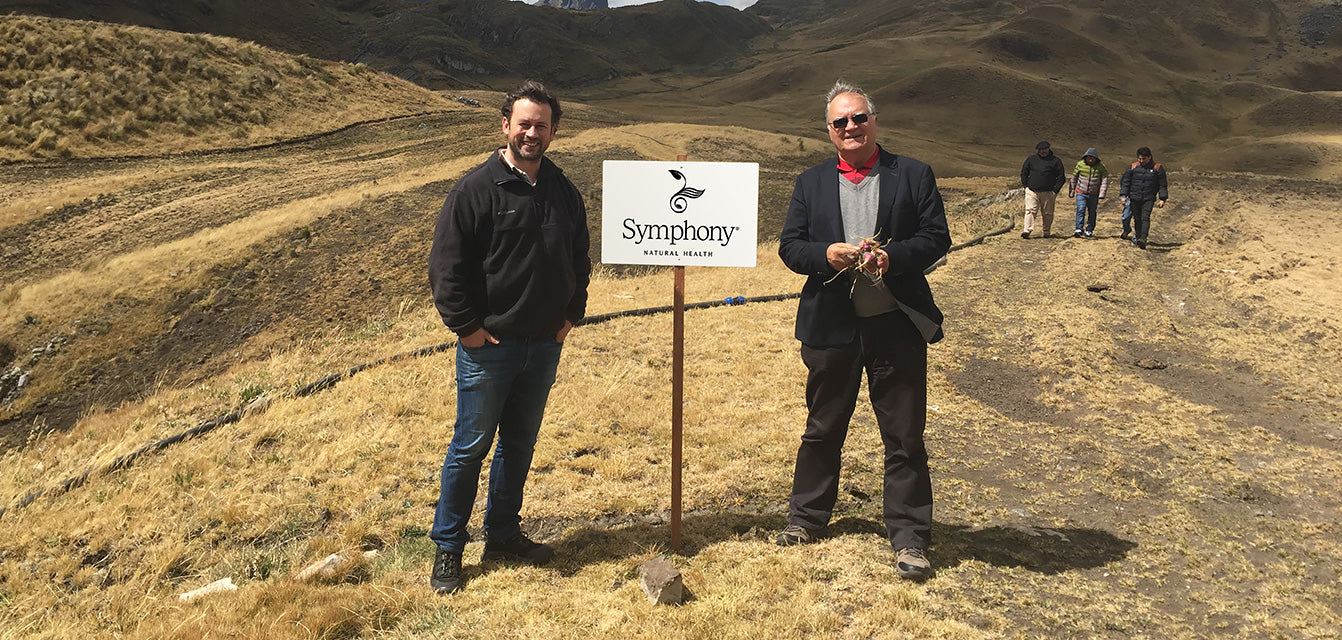
Our partnership in Pakistan, where we source Original Himalayan Crystal Salt, has enabled us to not just have a financial impact on the local community, but also a significant social impact. We achieve this through supporting education through local schools as well as ensuring there is no child or slave labor used in our mines.

We believe we have a social responsibility, not just to the health of our customers, but to the health and well-being of our team and partners around the world.

We believe that every single person, whether you are working in a mine in the foothills of the Himalayas or in our warehouse in Utah, should be able to earn a living wage and most importantly have a safe work environment.

Environmental Impact

+

To ensure a safe working environment, and to lessen the potential environmental impact on our planet, we do not use explosives in any of our mining processes. ⁠

But, our commitment to having the smallest environmental impact possible extends far beyond our no explosives policy. To minimize the impact we have on local flora, fauna, streams and landscapes, we use only hand-mining techniques to extract our salts and, rather than carve wide roads into the valley and mountainside to cater for large trucks, we make the choice to use man-power and donkeys to transport our crystal stones from the mine to the sorting and packing facilities.⁠

Economic Impact

+

We believe in forming deep relationships that are life changing, not just with our customers, but also with our business partners around the world.

Having worked in developing countries for 22 years we realized early on that by paying 20-30% more through Fair Trade type programs for commodities like coffee, herbs or salt, the income of the local communities was significantly improved.

However, we learnt that we could make an even greater impact by establishing strong joint-venture partnerships with the local people to create value-added goods, small industry, and year-round employment, we could inject up to 10 times the amount of money into those communities and really change lives.

The Original Himalayan Crystal Salt® Logo

+

The depth of our relationship to the local community we partner with and our support through their schools is symbolized by our Original Himalayan Crystal Salt logo, which is the insignia of the Royal Education Foundation in the Hunza area where our mine is located The Royal Education Foundation graciously extends their blessing for us to use their insignia as a reflection of our connection to the Hunza people and the authentic origin of our unique salts.⁠

The Original Himalayan Crystal Salt® Logo

Available at these grocers and wellness centers

From our Community

Customer Reviews

Frequently Asked Questions

Questions About Original Himalayan Crystal Salt® Inhaler?
We’re Here to Help

How do I use the Inhaler?

+

Simply inhale through the mouth and exhale through the nose for 15-20 minutes a day.

How does the Salt-Air Inhaler work?

+

Since exposure to air pollution and modern environmental stressors is difficult to avoid, it’s practical to explore ways to support respiratory comfort, just as we do with skin, hair and overall wellness. Air quality challenges are commonly discussed in relation to everyday respiratory irritation and discomfort, particularly in more industrialized environments.

The Salt-Air Inhaler is a convenient, drug-free, non-invasive device designed to let you experience salt-air therapy, similar to the atmosphere of a salt cave. As air is drawn through the inhaler, it passes over natural salt crystals, allowing microscopic salt particles to be inhaled. This process helps support a clean, comfortable and balanced breathing experience.*

Salt-air inhalation may be especially supportive during exposure to:*
• Seasonal environmental irritants such as pollen
• Dry or recycled air, including airline travel
• Smoke or airborne particles
• Everyday respiratory congestion or discomfort*

Do I need to add water to my Inhaler?

+

No. The inhaler is not a steamer. It is a dry, salt-air inhaler. Do not add water.

Are there any additives in the Salt-Air Inhaler?

+

No. The only ingredients to the Salt-Air Inhaler includes 100% Natural Coarse Granulated Original Himalayan Crystal Salt® in a ceramic salt device.

What quantity of salt crystals are typically used in the Inhaler?

+

There are 200 grams (7 ounces), just under ½ pound.

Is the Salt Inhaler itself 100% lead-free? Is the glaze/paint 100% lead-free?

+

Nothing that comes from the soil is completely lead-free. All foods grown in soil contain naturally occurring trace amounts of lead, and ceramic, being made in part from soil-derived materials, can also contain trace amounts.

Something to be aware of is that ceramic glazes were historically made with intentionally added lead, similar to how lead was once used in paint. We do not use those types of glazes, and we do not use lead-based decals.

Because ceramic materials originate from soil, we cannot claim the product is 100% lead-free. What is important is that no lead is intentionally added at any stage of our ceramic or glazing process.

How do I clean the Salt Inhaler?

+

It can be washed with boiling hot water, then allowed to dry fully. If you want to speed up drying, use a hair dryer to ensure the inside is completely dry before adding new salt.

There are cracks in the bottom of my Inhaler. Is this dangerous?

+

Sometimes small hairline cracks can occur during the firing process. However, our QA process ensures any ceramic particles are removed as we use blasts of air over 10 times what the human body is capable of. For this reason, nothing can be inhaled through the cracks you may notice..

Can I stop using my medical inhaler for asthma if I use the Salt-Air Inhaler?

+

The Salt-Air Inhaler is designed for general respiratory comfort and does not replace prescribed medical devices or medications. Always consult your healthcare professional before making changes to your care routine.

References

+
  1. Certificate of Analysis of The Original Himalayan Crystal Salt(TM)
  2. EMSL Analytical, Inc. (2023). Analysis of Microplastics Project: Microplastics in OHCS. Order No. 362300247. 
  3. Symphony Natural Health. (n.d.). The difference between salts. 
  4. Fayet-Moore, F., Wibisono, C., Carr, P., Duve, E., Petocz, P., Lancaster, G., McMillan, J., Marshall, S., & Blumfield, M. (2020). An Analysis of the Mineral Composition of Pink Salt Available in Australia. Foods (Basel, Switzerland), 9(10), 1490. 
  5. Kuttykattil, A., Raju, S., Vanka, K. S., Bhagwat, G., Carbery, M., Vincent, S. G. T., Raja, S., & Palanisami, T. (2023). Consuming microplastics? Investigation of commercial salts as a source of microplastics (MPs) in diet. Environmental science and pollution research international, 30(1), 930–942. 
  6. Kuhn, T. & Chytry, P. & Souza, G.M.S. & Bauer, Deiverti & Amaral, L. & Dias, Johnny. (2019). Signature of the Himalayan salt. Nuclear Instruments and Methods in Physics Research Section B: Beam Interactions with Materials and Atoms. 477.
  7. Śmiechowska, Maria & Ruszkowska, Millena & Olender, Oliwia. (2021). Selected Quality Characteristics of Sea Salt Important During Transport and Storage. TransNav, the International Journal on Marine Navigation and Safety of Sea Transportation. 15. 659-665.
  8. Chander, V., Tewari, D., Negi, V., Singh, R., Upadhyaya, K., & Aleya, L. (2020). Structural characterization of Himalayan black rock salt by SEM, XRD and in-vitro antioxidant activity. The Science of the total environment, 748, 141269. 
  9. University of Hawai’i. (n.d). Traditional Ways of Knowing: Salt Harvesting. College of Education. 
  10. Celtic Sea Salt Brand. Analysis of the Elements
  11. Di Salvo, E., Tardugno, R., Nava, V., Naccari, C., Virga, A., Salvo, A., Corbo, F., Clodoveo, M. L., & Cicero, N. (2023). Gourmet Table Salts: The Mineral Composition Showdown. Toxics, 11(8), 705. 
  12. Ruan, X., Ao, J., Ma, M., Jones, R. R., Liu, J., Li, K., Ge, Q., Xu, G., Liu, Y., Wang, T., Xie, L., Wang, W., You, W., Wang, L., Valev, V. K., Ji, M., & Zhang, L. (2024). Nanoplastics Detected in Commercial Sea Salt. Environmental science & technology, 58(21), 9091–9101. 
  13. Renzi, M., & Blašković, A. (2018). Litter & microplastics features in table salts from marine origin: Italian versus Croatian brands. Marine pollution bulletin, 135, 62–68. 
  14. Gündoğdu S. (2018). Contamination of table salts from Turkey with microplastics. Food additives & contaminants. Part A, Chemistry, analysis, control, exposure & risk assessment, 35(5), 1006–1014. 
  15. Taghipour, H., Ghayebzadeh, M., Mousavi, S. M. S., Sharifi, H., & Payandeh, A. (2023). Incidence and exposure to microplastics in table salt present in the Iran market. Toxicology reports, 11, 129–140. 
  16. Rao, B. S., & Vijayasarathy, C. (1975). Fortification of common salt with iron: effect of chemical additives on stability and bioavailability. The American journal of clinical nutrition, 28(12), 1395–1401. 
  17. Dorazio, S. J,, & Brückner, C. (2015). Why Is There Cyanide in my Table Salt? Structural Chemistry or the Anticaking Effect of Yellow Prussiate of Soda (Na4[Fe(CN)6]·10H2O). Journal of Chemical Education. 92(6):1121-1124.
  18. Arroyave, G., Pineda, O., & Scrimshaw, N. S. (1956). The stability of potassium iodate in crude table salt. Bulletin of the World Health Organization, 14(1), 183–185. 
  19. International Organizing Committee for the World Mining Congresses. (2024). World Mining Data 2024. Federal Ministry Republic of Austria. 
  20. Hurst KE, Ayed C, Derbenev IN, Hewson L, Fisk ID. Physicochemical design rules for the formulation of novel salt particles with optimised saltiness. Food Chem. 2021;360:129990. 
  21. Salex Group. [n.d.]. Available from: https://salexgroup.com/en/p-Refined-iodized-table-salt-2
  22. NIST. [2017]. 
  23. Cerebos Foods Finished Product Specification. 2020.
  24. Praan Naturals. 2021.